

Calling All Writers! BookGo Needs You!
Free writing development sessions for subscribers | An interview with Chuck Wardell, author of “Come Up Big” | How to know what to write next | And more | BookGo Issue #24 ✨


Hello all and welcome to the first weekend in September. We’re the other side of Labor Day and eyeing up a very exciting final few months of 2025. We’ve got another jam-packed newsletter for you, but first up a quick plea!
✨ BOOKGO ON SOCIAL MEDIA! ✨
As we try to expand our reach, we’re building up our presence on social media and if you’re on any of these platforms we’d be so grateful if you could follow us on…
While we’re trying to grow, every additional follower helps! Thank you! 💛
Now with that shameless plug out of the way, let’s take a look at what’s in store this week!
Table of Contents
Interview: 10 Questions with… Charles “Chuck” W.B. Wardell III, author of Come Up Big
Announcement: Calling all writers! Subscribe to the BookGo newsletter for a free development workshop on your book pitch!
Poem of the Week: “Autumn Rain” by D.H. Lawrence
Author Tools: “What to Write Next?” by Michael McKinley
News: Listen to BookGo’s Tomas Elliott on the Radical Writing Podcast
Announcement: Everything for You and YourBook!


Interview: 10 Questions with… Charles “Chuck” W.B. Wardell III
The author of Come Up Big answers the BookGo questionnaire
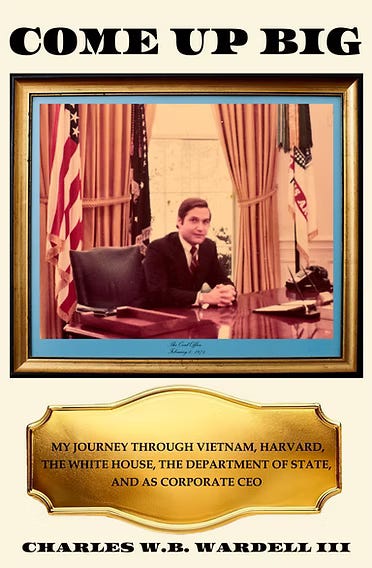
This week, BookGo spoke to Chuck Wardell ahead of the release of his memoir Come Up Big: My Journey through Vietnam, Harvard, the White House, the Department of State, and as Corporate CEO, releasing this fall.
1. What books are on your nightstand?
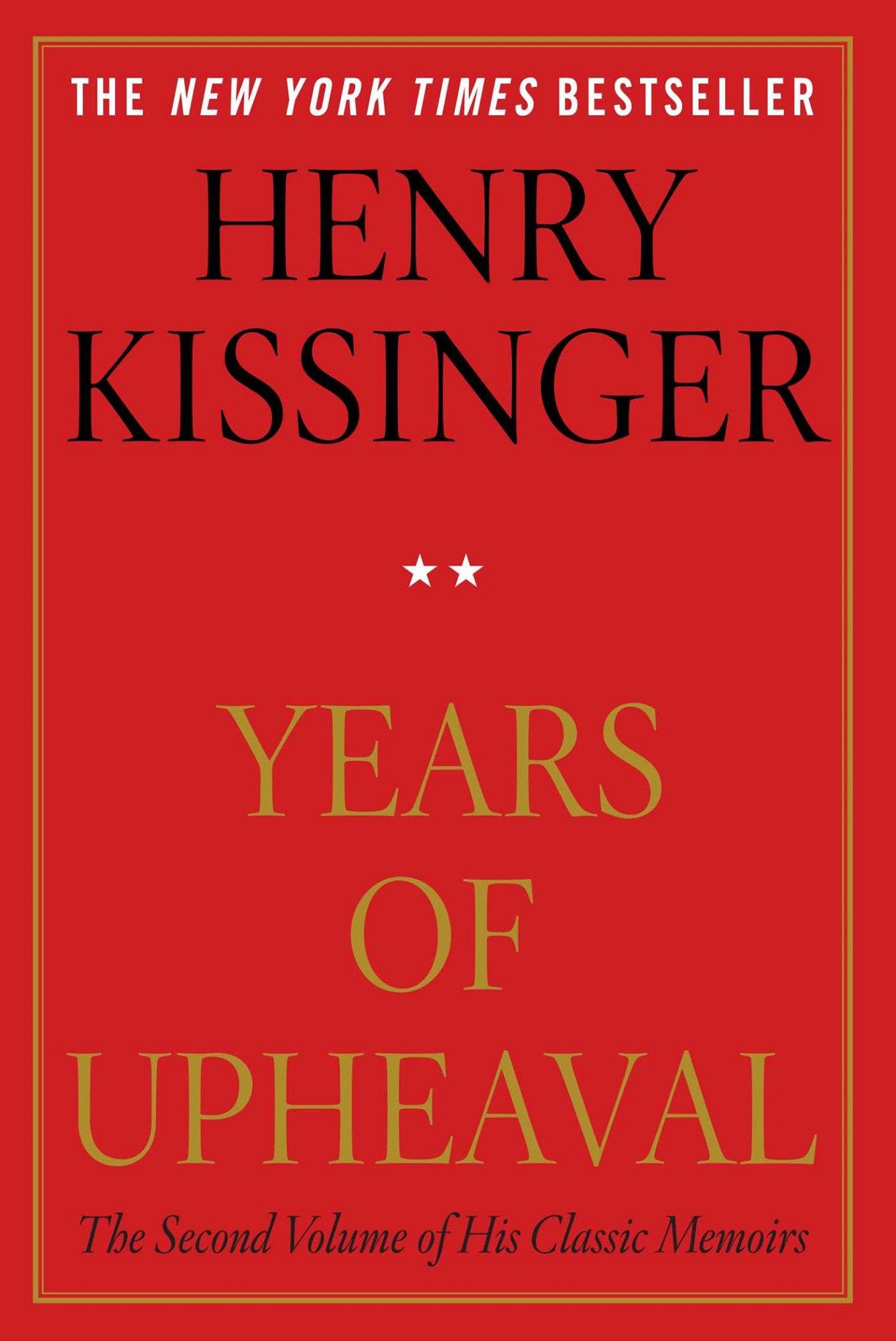
I have my old boss Henry Kissinger’s Years of Upheaval sitting there. It accounts for a lot of the things I lived before and during my time in the White House. And with it, I have Jeffrey Archer’s Best Kept Secret which is Book 3 in his Clifton Chronicles series. It takes place in the UK and America from the end of World War 11 through the 1950s. He keeps me engaged from page 1.
2. What is your favorite mode of reading? Online? Book in hand?
I do read online, but when given the choice, I prefer the book in hand.
3. What book do you regularly give as a gift?
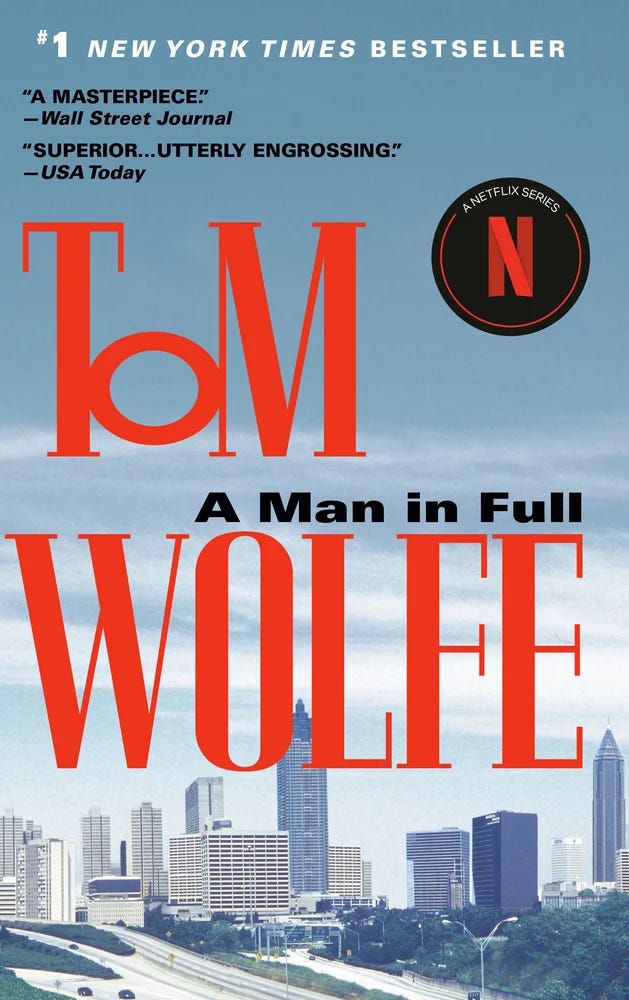
I don’t usually give books as gifts, but I am soon going to start by handing out my own! The last book that I did give as a gift was Tom Wolfe’s A Man in Full, which was published in 2001. The first half of the book was great and the last half read like he had to finish it in a hurry. I gave it to a colleague whose career was a bit like the structure of the book.
4. What is the best advice anyone ever gave you about telling your story?
It’s not so much about telling my story, but about how to live. My father told me “Never buy anything that eats!” which I write as I look at my dog Ruby, who is telling me that she wants her lunch. And Richard Nixon told me “Don’t want it so bad,” which was about ambition in Washington but can apply to everything.
5. What is the best adaptation of a book-into-film you ever saw?
As shocking as it may be, I do not go to films.
6. If you were a character in a book, who would you be?
Admiral Elmo Zumwalt. In his memoir.
7. What is your day job? How did you come to it?
I am unemployed. I came to it honestly.
8. What made you want to tell your story?
My son Charlie is an amateur genealogist for our family, and he said, “You know, the 12th President of Harvard was a Willard and a relative, and someday people might like to know that they had a relative who worked in the West Wing, and they might want to know his story.”
And so that started me down the path, and then I thought, “Wait a minute—little old Chucky did a hell of a job. He did it by himself. I mean, he went from thing to thing to thing with no evidence that he would succeed in any of them.”
In hindsight, it was an amazing run, and it was completely unplanned. So that’s really what made me do it, and then I got into it, and it started to occur to me as I rolled along that somebody else may want to read it besides my family, although that’s still unclear.
9. Do you have a favorite book that you reread often?
They’re hardly intellectual works but John D. McDonald wrote a series of books on Travis McGee, and I read those books over and over again. They're very philosophical and very interesting. I'm interested in what he thinks about people and how they act. I've color coded my favorite expressions in his books, and when I re-read them, I see the color code and I know that the lines spoke to me before, and then I discover they still speak to me the same way now.
10. You are having a dinner party: what 3 authors would you invite?
Winston Churchill, Zhou Enlai, and Sun Tzu. Churchill said, “history will treat us kindly, because I intend to write it.” I see the history of my time in the White House and in the war in Vietnam and the importance of winning versus losing made a huge impression. I like Churchill’s view of how we look at our own history.
Zhou Enlai because he was close to Nixon and met Nixon at the bottom of the airplane stairs when Nixon went to China in 1970. Most importantly, he was on the Long March and so he was part of the revolution Mao brought to China.
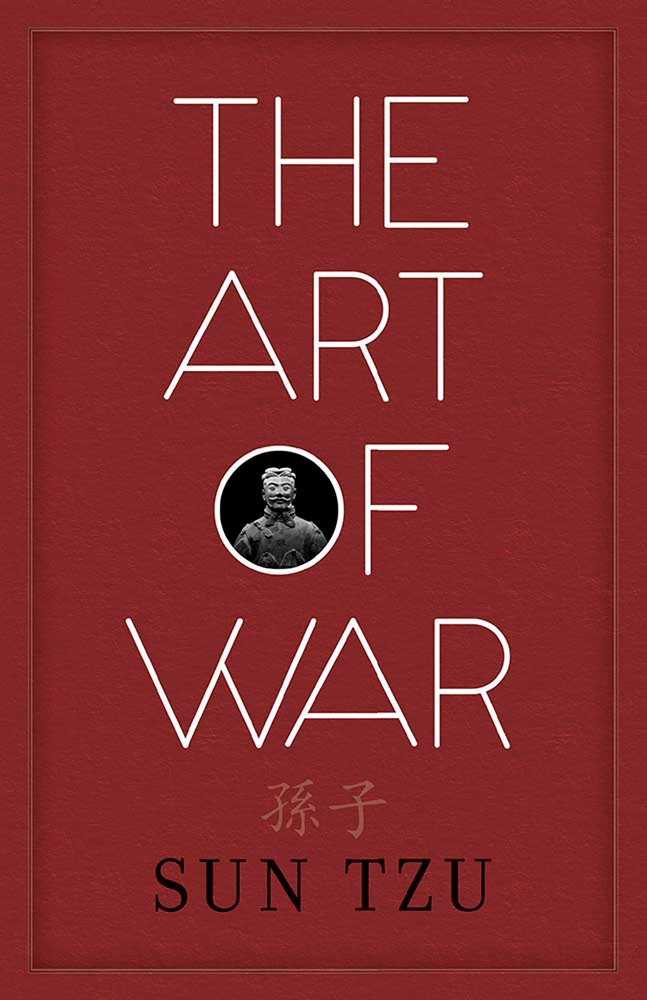
Sun Tzu wrote The Art of War. It has 13 chapters, and each one deals with some aspect of what you need to bring to war, like strategy, tactics, and purpose. The book also argues for diplomacy and the cultivation of good relationships with other nations as a way to prevent war, and I am all for that. So with one Brit and two Chinese at my table, I think I would serve Ruby’s favorite dinner, steak and spuds.
Learn more about Chuck Wardell’s interesting life in extraordinary times. Preview Come Up Big, launching Fall 2025.

Announcement: Calling all writers! Free 30-minute development workshop for your book pitch! Open to all subscribers.
At BookGo, we’re always looking to meet new and brilliant writers. We want to hear your stories and help you share them with the world. Therefore, we’re offering a very special opportunity to anyone who subscribes to the BookGo newsletter! 🎊
Simply send us a one-page pitch summarizing your book or story idea, and we’ll give you a FREE 30-MINUTE WORKSHOP SESSION with feedback on how to develop your project. 🙌
Our editorial team has over fifty years of combined experience in publishing and editorial experience – we know that everyone’s got a story to tell and we can’t wait to meet you. 👋
Send us your one-page pitch at info@bookgo.pub.

Poem of the Week: D.H. Lawrence’s “Autumn Rain” (1917)
By Tomas Elliott
This short and quiet poem by English writer D.H. Lawrence was first published in 1917. At first glance, it seems to explore both the mundanity and the miraculousness that is a little fall of rain. I’m reminded of this poem whenever the first rains of September signal a changing of the guard in the cycle of the seasons.
“Autumn Rain” by D.H. Lawrence (1917)
The plane leaves
fall black and wet
on the lawn;

the cloud sheaves
in heaven’s fields set
droop and are drawn

in falling seeds of rain;
the seed of heaven
on my face

falling — I hear again
like echoes even
that softly pace

heaven’s muffled floor,
the winds that tread
out all the grain

of tears, the store
harvested
in the sheaves of pain

caught up aloft:
the sheaves of dead
men that are slain

now winnowed soft
on the floor of heaven;
manna invisible

of all the pain
here to us given;
finely divisible
falling as rain.
At one level, the poem is simplistic. Its opening stanzas rhyme with an easy and formulaic abc, abc, much like the steady patter of the “falling seeds of rain” that land upon the speaker’s face. But there’s also a sense of the sublimity of the connection that the rain provides with an ethereal world: it is the “seed of heaven,” the “manna invisible” that falls from the boards of heaven’s floor, as if some almighty presence were trampling back and forth upon the welkin that encompasses us.
If that is indeed the image, though, then is it a happy one? Where would we be located in that case if not trapped in some kind of worldly cellar, staring at the ceiling above us? More importantly, for Lawrence, is the rain an image of renewal, of the life-giving force sent from heaven above and bringing the bountiful harvest? Or is it not rather an image of death, of destruction, where the only harvest is that of “the sheaves of/dead men that are slain”?
These darker images linger in the poem’s final stanza, when its apparently simple and regular rhyme scheme—the triadic abc pattern—breaks down, collapsing into four lines that are rhythmically unresolvable, as unresolveable as worldly “pain” itself.
For that reason, might we even read this as a war poem, given that it was published in 1917, a year after one of the most devastating autumnal falls the world had ever known? In the midst of life, Lawrence’s quiet and beautiful poem seems to suggest, we are always in death.

Author Tools: “What to Write Next”
By Michael McKinley
One of the questions that I frequently grapple with is “What should I write next?” If you take the need to make a living out of the equation (not that you ever really can do that if you write for that living, so let’s deal with that later) then the question becomes clearer. Rather, pursuing an actionable answer to it does.
I collect stories in progress. I have a file for story ideas. I have novels that are three quarters written, and some that are completely written in need of revision. I have screenplays and pilot scripts in play, and some about to get to that stage. I have a lot of stuff swirling around in my laptop, and now that I am about to have a window, having finished the formatting and uploading of our first three books for BookGo, the question of what to attack next is very real.
Now, if you’re the lucky owner of one killer idea and that’s all you eat, sleep and drink, then stop reading this and go back to finishing it! I have found on my travels that most of us who write have a few stories in play, and the “next one” is always in the back of our minds.
So this is how I handle it. Which is the story that I think about most? That’s usually the one that I want to tell. Now I just did that very thing, and three of them came up. So what that means is that I can start/resume all three, or pick an order.
I will choose the former, as that’s how I am wired. I work better if I am working on a couple of things at the same time. But picking those couple of things is another way to focus on using your time and your talent to maximum benefit. Of course, if a story opportunity comes along that is going to change your life and the lives of others, then most certainly let it jump the queue.
Now we can go back and put the idea of commerciality into the mix. We always think our best ideas will be commercial, because we love them, and so, our thinking goes, shall others. Maybe many many others.
So, unless you are actually being paid to write something, and have a deadline and so on, then really, ask yourself which of your ideas do you think the world wants the most? I know, you might think that this takes a touch of psychic ability, but it really doesn’t. It takes your own feeling for your story, and the power that you can bring to telling it that determines its success out there in the marketplace of ideas.
All of which is to say that the story or screenplay or stage play or poem or picture book which you should write next is the one that you would most like to read, or to see. There is always a candidate at the front of the list. The challenge is to let it be that thing, and to then devote the time to telling it the best that you can. And once you have-- or in my case, spent the morning on it, then move to the second place idea in the afternoon, and start in on it-- I find that one will fuel the other, and the whole thing becomes energizing. But you will know how you feel. The thing to do is find the story for which you feel the most, and get on with it.

News: Listen to BookGo’s Tomas Elliott on the Radical Writing Podcast
This month and next month, BookGo author and director of media Tomas Elliott appeared on the Radical Writing Podcast, hosted by poet and lecturer Sam Kemp. The Radical Writing Podcast is an amazing series that brings together academics, students, and interested readers to discuss the best in “experimental” literature from across time.
In the most recent episode, Tom spoke to Sam and Dr Chloe Pinto about the French surrealist writer, playwright, filmmaker, and theorist Antonin Artaud and his vision for what he called a “Theatre of Cruelty.”
Next month, Tom will be back again to discuss the even more radical work of British playwright Sarah Kane. If you’re interested, subscribe to the Radical Writing Podcast for lots more explorations of experimental writing!
Announcement: 📓 Everything for You and YourBook 📓
If your new book is not rocking, we want to help get your book rolling.
You might be a brand-new writer with new ideas and no idea what to do…
You may already have authored your first book but are not sure how to bring your new baby book into the world…
Or you don’t want to go back to Amazon, but want custom care…
Or you are a highly experienced professional, and it is time to write your memoir, or how-to book, but you are not an experienced writer…
Or you are a published author with a winning first, or even second book, but the next one is just not… not…
Or your book is printed, published but your Media Marketing is not catching on and getting the readers your fabulous new novel deserves…
We roll! Whoever you are or wherever you are in the publishing process, YourBook is everything and everyone you need to take your book from a gleam of an idea, or a few inspired scratches on a piece of paper, through development, production, promotion and on to your readers, on to book clubs and onto the bestseller list. 💪
No matter your budget, we can work with you to get your book out there!
What We Offer:
Development
⭐ For you, the BRAND-NEW WRITER, we have Starter Sessions. We’ve all been there, at the beginning. We can see a gem in the rough gleaming.
Our writers and editorial team can help you
Develop your idea
Create your pitch
Structure your chapter outline
We’ll talk story with you. The first half hour is free.
⭐ For you, the PROFESSIONAL, when it is time to write your memoir, or how-to book, or you’re looking to expand your career into writing, lecturing and consulting, or to share the wealth of your experience in a memoir, we can help.
Our development team can offer support with
Interviews and research
Story outlining
Mentoring from award-winning ghostwriters
We can help you use your authority and experience to turn your story into a bestseller.
⭐ For you, the PUBLISHED AUTHOR with a winning first, or even second book, but the next one is just not… not… With us your next book will come together brilliantly.
Our editors and writers will help you:
Refresh your story ideas
Re-imagine your characters
Polish your prose
Restructure your plot
We can share your new book at any time with our readers who can help you find the heart of your new book.
Production
For the new novelist not sure how to bring your new baby book into the world? And for authors who don’t want to go back to Amazon, but want custom care.
We have proofers and copy editors to make sure your book is in top shape.
We also have talented graphic artists to design your book’s cover so it captures your story and also stands out online and on the bookshelf—we do judge books by their covers!
Promotion
So, your book is published but your marketing is not catching on and getting you the fabulous following your new book deserves.
WE KNOW MEDIA MARKETING, WEBSITES AND SOCIAL MEDIA, AND WE KNOW IT IN THE U.S., CANADA, THE U.K., INDIA AND AUSTRALIA.
We can prepare a press release for you and your book, build a website and curate it, set up Social Media sites and posts, even put out ads for your books and get you reviews and podcasts. Or all of it!
We can put together a media marketing campaign for your book that works for you. You don’t need to have a million followers on TikTok.
However much you want to be involved or not, we will scale your campaign to who you are, your book and your budget.
YourBook works with every writer, from aspiring unpublished authors to retired brain surgeons.
We can take on any project, from a picture book to an epic fantasy.
We look forward to working with you and developing, producing and promoting your book in the way it works for you.
We never use AI, only RBI—Real Book Intelligence.
YourBook is a the editorial and development arm of BookGo
Contact us now for a free half-hour session.

Coming Soon
Please stay tuned for more updates coming from BookGo and YourBook.
In the weeks to come, we’ll be building up to the official release of our first BookGo and YourBook books with exclusive interviews with authors, book launches, and more.
We want to connect with more readers and writers so do please share our work and get in touch if you know a reader or writer we should talk to!
The BookGo Team 💖